
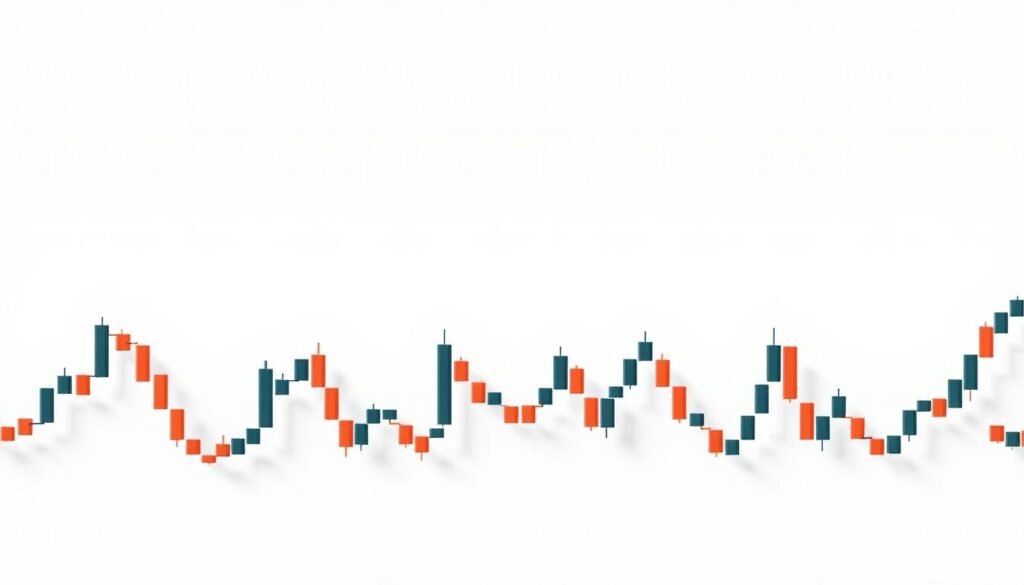
We introduce how candlestick charts compress open, high, low, and close into visual signals that help us read price movement quickly across digital asset markets.
These visual bars trace back to Japanese rice trader Munehisa Homma and found a wider audience after Steve Nison’s 1991 book. Adobe’s overview helps us name bodies, shadows, and color while urging that charts work best with other technical analysis tools.
We preview this ultimate guide: fundamentals, bullish reversal and bearish reversal formations, and continuation setups. We will show single-bar signals and multi-bar pattern formations and how each can mark momentum shifts.
We also set expectations on confirmation, confluence, and risk controls. Examples include the three white soldiers, Doji, Engulfing, and the hammer candlestick pattern. No single setup guarantees gains; we focus on repeatable processes for U.S. traders.
Key Takeaways
- Charts compress price movement into quick visual signals for faster reads.
- Historical context and modern rules improve our reading of chart formation.
- We pair pattern signals with confirmation and trend context for higher odds.
- Risk management—stops, invalidation, size—is core to any setup.
- This guide moves from basics to advanced setups, with practical screeners and rules.
Why we wrote this ultimate guide for U.S. crypto traders
We created this guide to help U.S. traders separate useful signals from noise and build repeatable rules for entries and exits. Our focus is practical: learn what makes a reliable candlestick pattern, how to confirm it, and how to size risk before you trade.
We stress pairing visual signals with other tools. Use moving averages, volume, and simple technical analysis to validate a read. Practice entries and exits in demo environments so live trades feel routine, not emotional.
We also cover U.S. specifics like exchange liquidity, trading hours, and tax-aware holding choices. That context helps traders use workflows that match regulation and platform quirks.
- Process over prediction: plan for both bearish bullish outcomes before a trigger.
- Scan and journal: use checklists, live screeners, and trade logs to refine what works.
- Signal quality: a top candlestick pattern is about context, confirmation, and reward-to-risk, not a neat hindsight story.
How candlestick charts work in crypto markets
To read market action fast, we break a single bar into its body, wicks, and color and show what each part tells us.
Bodies, shadows, and color: open, high, low, close
The body represents the open-to-close range; shadows mark the intraday high and low. Color shows direction — a green or white close above the open signals buyers, while red or black shows sellers won the session.
Wicks reveal volatility and rejection. A long lower shadow can show buyers stepped in, a cue often seen with a hammer candlestick or an inverted hammer at support.
Reading market sentiment from single candles
A single bar compresses price movement but still reveals momentum via range, wick length, and the closing price relative to the open.
We use common timeframes (1h, 4h, daily) and wait for confirmation before acting. Single-bar signals like a bullish candle, marubozu, or shooting star can hint at a turn, but trend context and volume improve reliability.
- Three white soldiers sequences show sustained buying across sessions.
- Extreme wick-to-body ratios may reflect news spikes; we filter those to avoid false entries.
Crypto candlestick patterns explained
We group common formation families so readers can spot high-probability trade setups fast.
Major families fall into bullish reversal, bearish reversal, continuation, and indecision. Bullish reversal examples include the hammer candlestick pattern, morning star, and three white soldiers. Bearish reversal reads include the hanging man, evening star, and three black crows.
We define a reliable reversal pattern by three things: a clear prior trend, decisive momentum change, and confirmation beyond a single bar. The three white soldiers often signals strong bullish commitment, while three black crows can warn of a trend reversal when volume and follow-through confirm the move.
Single-bar setups such as the inverted hammer or hanging man differ from multi-bar formations like the morning star or engulfing pattern. An engulfing pattern is powerful when the real body fully covers the prior candle and price closes with follow-through. Place stops near the engulfed candle for clearer invalidation.
Indecision bars like a spinning top or doji often precede either a pause or a turn. We rate top candlestick quality by body size, shadow length, and swing location. Recognizing a pattern is step one; planning entry, stops, and size turns recognition into repeatable results.
Reversal vs continuation vs indecision patterns
Knowing when a formation marks a genuine turn versus a brief consolidation saves capital and time.
We judge any candlestick pattern by three factors: prior trend, location, and follow-through. A high-quality reversal pattern usually appears after a clear move and flips momentum with volume and structure change.
When a pattern signals trend reversal
Look for momentum change. After a sustained run, a bullish reversal or bearish reversal is more credible when the next candles break structure — higher high/higher low or lower high/lower low — and volume confirms the move.
When a pattern signals trend continuation
Some formations act as digesting moves. Continuation setups, like rising three methods or falling three methods, often pause price before the next leg. A doji or spinning top can be neutral alone.
Context matters. A spinning top at resistance followed by a decisive break carries weight. Use multiple timeframes: a 1-hour reversal that conflicts with a daily uptrend may be only a countertrend bounce.
- Check volume and volatility spikes for true reversals.
- Wait for structure (higher high/lower low) to avoid overfitting.
- Use technical analysis tools to confirm the read before sizing positions.
- Confirm prior trend direction.
- Note pattern location vs support/resistance.
- Require follow-through in the next 1–3 candles or invalidate.
| Signal | What to expect | Confirmation cue |
|---|---|---|
| Reversal pattern | Momentum flip after clear trend | Volume surge + structure break |
| Continuation | Short pause then trend resumes | Low volatility then directional breakout |
| Indecision | No clear bias; small bodies | Follow-through required or ignore |
Support and resistance levels in context
We map key price bands first so each pattern shows up inside clear structural context. Drawing support resistance lines helps us see where a reaction is likely and where a trade has real edge.
Start with structure: mark prior swing highs and lows, order blocks, and moving averages. When these align, resistance levels and demand zones gain weight and improve the odds of a valid candlestick pattern.
Validate levels by checking multiple touches, clustered volume, or failed breakouts that leave long wicks. A bullish signal at confluent support carries higher expectancy than the same pattern printed mid-range.
- Treat levels as zones, not lines—allow for spread and volatility.
- Place stops beyond obvious liquidity pools so invalidation is clear.
- Adjust size around thin liquidity or news spikes to protect capital.
| Level cue | What to look for | Why it matters |
|---|---|---|
| Multiple touches | Repeated reaction | Shows tested support resistance levels |
| Volume clusters | High activity at level | Identifies real demand/supply zones |
| Failed breakout | Wicks or quick reversals | Often precedes fast moves and better R:R |
Finally, align timeframes: a daily level can override intraday cues. We integrate level context into our screening so we only chase signals backed by structure and clear technical analysis.
Bullish reversal highlights: hammer, inverted hammer, morning star
We review three high-yield bullish reversal reads that traders use to spot a shift from sellers to buyers. Each has clear structure, a validation rule, and common failure modes we watch for.
Hammer structure and confirmation
Hammer candlestick pattern has a short body and a long lower shadow at least twice the body. A green close is stronger because buyers held price into the session end.
Confirmation improves odds: require the next session to close higher. Place invalidation just below the hammer low to keep risk clear.
Inverted hammer reliability and limits
An inverted hammer shows a long upper shadow (about twice the body) and a small lower tail. It signals rejection of lower prices but is less reliable than a hammer.
We demand stronger context — support nearby and a follow-up bullish candle — before trading. Treat entries cautiously and use tighter stops.
Morning star and the doji variant
The morning star is a three‑bar bullish reversal: a long bearish candle, a small middle bar (often a doji), then a long bullish candle. The doji middle emphasizes a pause and shift in control.
Studies peg success rates near the mid‑60s for morning star variants when volume and follow‑through confirm the move.
- Entry tactics: conservative—wait for close above the first candle’s midpoint; aggressive—enter intra‑candle with tight stop.
- Volume cue: rising volume on the final bullish candle signals strong bullish conviction.
- Pitfalls: avoid hammers after sharp bounces, and never ignore the dominant downtrend.
- Checklist: body size vs prior bars, diminishing lower wicks on follow‑up, clear structure for scaling exits.
Bearish reversal highlights: hanging man, evening star, three black crows
When upward momentum falters, a few specific formations often signal that sellers are gaining an edge. We review three high‑risk, high‑information setups that traders use to spot early trend deterioration.
Hanging man at resistance
Hanging man mirrors a hammer but appears after an uptrend. Its long lower shadow shows intraday selling even if the close is near the top.
We wait for follow-through: a lower high or a break of a nearby level before adding a short or hedge. Place stops above the pattern high to limit false signals.
Evening star confirmation cues
The evening star is the bearish twin of the morning star. It needs a small middle bar and a strong third candle that erases a large portion of the prior gains.
Compare it to a bearish engulfing pattern when both cluster at resistance; volume and breadth deterioration strengthen the case to act.
Three black crows and trend deterioration
Three black crows are three consecutive heavy closes with short or no shadows. They often mark a shift from buyers to sellers in exhausted rallies.
We avoid guessing tops. Instead, we require structure breaks or lower highs before committing. Use staged entries to reduce slippage and stop placement above recent highs.
Engulfing patterns that signal trend shifts
An engulfing pattern occurs when a large real body fully covers the prior candle’s body and closes with clear conviction. This shift at the closing price often marks a change in control and gives us a timely trade cue.

Bullish engulfing setup and stops
We treat a bullish engulfing pattern as valid after a downtrend. Entry rules we use:
- Trigger above the engulfing high.
- Place stop just below the engulfed low to keep invalidation clear.
- Scale size by nearby support resistance levels and higher‑timeframe context.
Bearish engulfing and momentum follow-through
A bearish engulfing pattern after an uptrend often precedes fast downside. We watch for volume expansion and RSI divergence to confirm momentum.
- If follow‑through lacks volume, expect a snapback and avoid oversized positions.
- Take partial profits at logical swing points and move stops to breakeven on follow-up structure breaks.
Checklist: prior trend, engulfing real body, closing price conviction, volume/R SI cue, and level location. Avoid forcing entries without trend context or placing stops inside the pattern’s body.
Three white soldiers and three black crows explained
A clear run of three decisive closes often flags a real change in market bias. We use two mirror setups to spot sustained commitment: the three white soldiers and the three black crows.
Identifying three consecutive strong closes
Three white soldiers are three consecutive long green bodies with higher highs and higher lows and small shadows. Each candle typically opens within or near the prior body and closes progressively higher. This soldiers pattern signals sustained buying after a downtrend and is a high‑quality bullish reversal when printed above a reclaimed level.
Three black crows mirror the setup: three consecutive long red bodies, short or absent shadows, and opens near the prior close. The three black formation points to sellers taking control and can mark a bearish reversal after an upswing.
- Validation: require each bar to open within the prior body and show three consecutive strong closes with limited wicks.
- Risk plans: for soldiers use a stop below candle two low; for crows place a stop above candle two high, sized to volatility.
- Confirm with rising volume and moving average slope to avoid low‑quality prints in choppy regimes.
| Signal | Entry cue | Invalidation |
|---|---|---|
| Three white | Close above candle 3 high or pullback entry | Close below candle 2 low |
| Three black | Close below candle 3 low or retrace entry | Close above candle 2 high |
| Quality filters | Body size, shadow ratio, relative volume | Choppy market or nearby strong level |
If a fourth candle stalls or retraces, treat small pauses as healthy digestion. A decisive reversal on candle four invalidates the setup and calls for exit or position trim. We screen for these sequences with filters on body size, shadow ratio, and relative volume to find the best trade candidates.
Doji and spinning top candlesticks as market indecision
Small-bodied bars often carry outsized information when the market pauses and reconsiders direction.
We define a doji as a bar where open and close are nearly equal. It signals market indecision and demands follow-through before we act.
The spinning top has a small body with roughly equal shadows. This spinning top often marks consolidation or a short rest before the next impulse.
Dragonfly and gravestone nuances
A dragonfly has a long lower shadow and a near-flat top. It shows rejection of lower prices and can hint at a reversal pattern when it appears at support.
A gravestone flips that logic: a long upper shadow signals rejection of higher offers and may precede a trend reversal when at resistance.
How we trade indecision
Doji or spinning top alone is neutral. We wait for a breakout from the bar range or see it included in a morning star or evening star for conviction.
- Watch volume and volatility contraction around the small-body bars.
- Place stops beyond wick extremes if fading, or wait for confirmed break to join the move.
- Repeated indecision at a level can mean accumulation or distribution—higher-timeframe context decides.
| Signal | What it shows | Trade cue |
|---|---|---|
| Doji | Near-equal open/close; indecision | Trade on breakout or as part of a multi-bar setup |
| Spinning top | Small body, symmetric wicks; consolidation | Look for volume pick-up on the breakout |
| Dragonfly / Gravestone | Long lower / upper shadow; directional rejection | Use nearby support/resistance and stop beyond wick |
Continuation formations traders use
Continuation formations help us avoid false turns and trade with the prevailing flow. These setups show that brief counter-moves did not dislodge the dominant bias.
Rising three methods and falling three methods
Rising three methods look like two long green candles that frame three small red inside bars. The three small bars stay within the prior range and “digest” gains before a breakout.
Falling three methods mirror that in a downtrend: one long red, three small green inside, then another red. Failed rallies inside the range reveal weak opposition and favor sellers.
- Confirm with a decisive breakout candle closing beyond the mini-range to cut head‑fake risk.
- Clusters of spinning top prints inside the range often strengthen the pause narrative.
- Entry tactics: retest breakout with stop inside the mini-range, or pre-break entry at reduced size.
- Use moving averages to align trades with higher‑timeframe flow and avoid major levels where reversals are likely.
- Expect smaller targets than reversal setups but higher win rates when structure, volume, and trend align.
“Three consecutive directional closes that start and finish the formation support the trend’s persistence.”
Timeframes, volatility, and closing price importance
Closing price context and volatility filters decide whether a setup is tradable or a false alarm. Each bar on candlestick charts represents OHLC for the chosen timeframe, so a one‑hour read can differ greatly from a daily close.
We trust higher timeframes for durable signals and trend reversal reads. Shorter timeframes give more noise and require filters.
We wait for bar closes to confirm a candlestick pattern before risking capital. The close shows where participants agreed at period end and often validates follow‑through.
- Use ATR‑based stops and targets scaled to your timeframe to size risk objectively.
- Align lower‑timeframe entries with higher‑timeframe bias to avoid countertrend traps.
- Apply volatility filters so we skip trades during erratic sessions, news, or thin weekend liquidity.
Backtest setups by timeframe and journal outcomes. Note session effects and how identical shapes performed under different volatility regimes. During macro events we taper risk or sit out; that preserves edge and lets us trade clearer closes later.
Technical analysis confluence that helps traders
We layer price structure with indicator signals so trades rest on more than a single bar.
Moving averages, RSI, and volume with candlestick patterns
Start with levels: mark support resistance and trend direction before considering any signal.
Then use a moving average to define bias and pullback zones. A bullish engulfing that forms near a rising 50‑MA has better odds than one printed in no‑man’s land.
Add RSI to spot momentum exhaustion. Divergence plus a reversal or engulfing pattern often signals a credible flip in bias.
- Watch volume surges: they confirm breakouts from spinning top clusters or indecision pauses.
- Avoid indicator overload by using a compact toolset: one MA, RSI, and a volume filter.
- Align indicators with support resistance to filter false signals during choppy markets.
Rules for invalidation: if price closes beyond your level or the MA slope reverses, exit quickly. Protect capital when confluence breaks down.
- Level confirmed (support/resistance).
- Trend bias via MA.
- Signal (reversal or continuation candlestick).
- Momentum/volume confirmation (RSI + volume).
| Confluence element | What to look for | Why it matters |
|---|---|---|
| Support / Resistance | Multiple touches or zone overlap | Shows where price is likely to react |
| Moving average | Price respect or pullback to MA | Defines bias and logical entries |
| RSI & Volume | Divergence or surge on breakout | Filters noise and confirms follow-through |
Pre‑trade checklist: confirm level, MA bias, candlestick signal, RSI read, volume cue, and a clear stop. We also use alerts to surface confluence events so traders use their time efficiently.
Entry, exit, and risk management around candlestick signals
We set clear entry and exit rules so trades rest on structure, not hope. Good risk rules turn a neat visual signal into a repeatable process.
Stop-loss placement near lows/highs and wicks
Define invalidation by structure. Place stops just beyond obvious wicks or swing points that, if hit, negate the pattern. For a hammer candlestick place the stop below the low. For an engulfing setup, set it beyond the engulfed candle’s extreme.
Use nearby support resistance levels when sizing stops. Avoid placing stops inside obvious liquidity pools where market noise will eat your risk.
Position sizing and invalidation rules
Size positions from the stop distance so we keep a consistent percent risk per trade. If the stop is wide, reduce size; if tight, scale up slightly.
- Enter conservatively on close-based triggers or intrabar for tighter, higher-risk entries.
- Scale out: partial take-profit at the first trouble area; trail the rest behind swing pivots or a moving average.
- Plan for both bearish bullish outcomes by mapping contingency exits before entry.
- Mitigate slippage and low liquidity with limit orders and lower size on thin pairs.
- Skip trades when confirmation fails or context degrades.
| Trade Phase | Rule | Why it matters |
|---|---|---|
| Entry | Close-based trigger or pullback into level | Reduces false entries and respects higher-timeframe flow |
| Stop | Just beyond wick, swing, or engulfed extreme | Clear invalidation point limits emotional exits |
| Sizing | Risk % fixed; size = risk / stop distance | Keeps account drawdowns predictable across volatility |
| Exit | Partial at first obstacle; trail remainder | Locks profit and lets trends run |
Journal every trade. We log setup, execution, and outcome to refine our use of candlestick patterns and technical analysis over time.
Common mistakes we see when reading candlestick patterns
We see a handful of repeatable mistakes that degrade pattern edge and increase drawdown.
Avoid treating every shape as a top candlestick pattern. Without a clear prior trend, level, and confirmation, a signal is just noise. Wait for structure and a follow‑up close before risking capital.
Forcing a trend reversal inside a range is another trap. Traders project bearish bullish narratives onto neutral price action and get whipsawed.
- Confirmation bias: do not only look for charts that confirm your view; seek disconfirming evidence first.
- Ignoring higher timeframes: small‑frame signals often conflict with the daily bias and lose more than they win.
- Stops inside the pattern: placing stops where normal noise lives leads to early exits; use clear invalidation points instead.
- Illiquid markets: wide wicks and slippage can distort any candlestick read and blow up risk controls.
- Over‑trading and risk creep: scaling after losers or chasing setups after a streak damages expectancy.
- Copying entries without an exit plan: know your stop and invalidation before you click.
| Mistake | Quick fix |
|---|---|
| Treating every shape as valid | Require prior trend + level + confirmation |
| Ignoring higher timeframe | Check daily/4H bias before entry |
| Stops inside noise | Place stops beyond clear wicks or swing points |
| Trading illiquid pairs | Reduce size or skip; prefer liquid venues |
Build a mechanical checklist to reduce emotion and increase consistency. Practice in demo accounts and journal every trade so mistakes become data, not repeated losses.
Tools and screeners to find top candlestick pattern setups
Modern scan tools let us rank setups by quality so we trade only the most actionable signals.
We configure live screeners to filter for formations like Three White Soldiers, Doji, Engulfing, and Hammer across pairs. Start by selecting your timeframes and the specific pattern set you want to monitor.
Live screeners and alerts on crypto pairs
Alert rules: trigger on closed‑bar confirmations, volume surge > X, and proximity to support resistance levels. Tie alerts to watchlists so we track instruments that are one candle away from confirmation.
- Rank hits by liquidity, spread, and ATR‑based volatility.
- Tag candidates (e.g., “near support”, “high volume”) to prioritize review.
- Automate scans at interval speeds that match your timeframe to avoid stale signals.
Validation workflow: move scanner hits into a trade checklist—confirm level, MA bias, volume, and set stop/target before entry. Save presets for trending, ranging, or high‑volatility regimes to reduce alert fatigue.
| Feature | Why it helps | How we use it |
|---|---|---|
| Real‑time alerts | Faster reaction to confirmation | Notify only on closed bars + volume filter |
| Level filters | Surfaces trades near structure | Require proximity to support resistance levels |
| Ranking | Prioritizes tradable setups | Sort by liquidity, spread, and volatility |
Conclusion
, We wrap up by stressing that context and confluence make visual reads actionable.
We recap core signals: three white soldiers for strong bullish runs, doji and spinning top for indecision, and the engulfing pattern for clear shifts. Hammer candlestick and inverted hammer alert us to potential reversals. At the top side, hanging man, evening star, and three black crows warn of bearish reversal risk.
Above all, pair any signal with levels, volume, and moving averages. Require confirmation, size around clear invalidation, and journal every trade. No single pattern guarantees results; disciplined rules, risk management, and continuous practice create lasting edge in technical analysis.
Disclaimer: This content is for informational purposes only and does not constitute financial or investment advice.