

Curious about how to stake ETH on Lido without locking funds for months? With Lido, you get liquid staking, earning Ethereum staking rewards while keeping a token you can use across DeFi.
In this guide, you’ll stake on mainnet or an L2, understand stETH vs wstETH, manage rewards, and exit when needed. You’ll also see costs, risks, and tax basics so you can move confidently and avoid common pitfalls. By the end, you’ll know exactly which path fits your setup and how to keep your staking efficient and safe.
Understand Lido and Liquid Staking Before You Commit

What Lido Does and How Rewards Flow to stETH Holders
Lido is a liquid-staking protocol. You deposit ETH, Lido delegates it across professional validators, and you receive staked ETH in return:
- stETH (rebasing token) on mainnet
- wstETH (wrapped, non-rebasing) commonly used on L2s
Rewards: stETH’s balance increases daily via rebasing. If you hold wstETH, your token amount stays the same, but its exchange rate to stETH/ETH rises over time, reflecting accrued rewards.
Why it matters: Liquid staking keeps your capital flexible, stake, earn, and still move value through DeFi pools, lending markets, or bridges.
stETH vs wstETH: When to Use Each and Why It Matters
- stETH: Best if you’re on mainnet and want easy, visible daily balance growth. Many mainnet pools and tax trackers understand stETH.
- wstETH: Best for DeFi protocols that prefer non-rebasing tokens, especially on Arbitrum, Optimism, and Base. It avoids rebase accounting complexity and is usually the default on L2s.
Conversion is lossless: wrapping stETH to wstETH (or unwrapping) preserves value: only representation changes.
Key Risks to Know: Smart Contract, Validator, Oracle, and Peg Risk
- Smart contract risk: A bug or exploit in Lido or bridges could impair funds.
- Validator/slashing risk: Poor validator performance or slashing can reduce rewards or principal.
- Oracle/accounting risk: Reward calculations or feed delays can create temporary mismatches.
- Peg/liquidity risk: stETH typically trades close to ETH but can diverge during stress: wstETH tracks value via exchange rate but secondary market liquidity still matters.
Quick risk snapshot:
- Custody: You retain tokens, but staking is pooled and governed by protocol contracts.
- Withdrawals: Native unstaking is available, but queues can form in volatile markets.
Pros and cons at a glance:
| Aspect | Pros | Cons |
|---|---|---|
| Liquidity | Use stETH/wstETH across DeFi while earning | Peg/slippage can widen under stress |
| Yield | Competitive ETH staking rewards | Variable APR: not guaranteed |
| Access | Simple UX: L2 integrations | Gas costs on mainnet: bridge risks |
| Flexibility | Wrap/unwrap, swap, or unstake | Unstake queues and delays possible |
| Diversification | Validator set spread reduces single-operator risk | Smart contract and governance risks remain |
Prepare Your Setup: Wallet, Network, Funds, and Costs

Choose and Secure Your Wallet (Ledger + MetaMask Recommended)
- Use a hardware wallet (e.g., Ledger) paired with MetaMask for transactions.
- Enable passphrases, set a strong PIN, and store the seed phrase offline.
- Review token allowances periodically: revoke unused approvals.
Fund the Right Network: Mainnet ETH vs L2 ETH (Arbitrum/Optimism/Base)
- Mainnet path: You’ll deposit ETH via the Lido app and receive stETH.
- L2 path: You’ll typically receive wstETH and use it in L2 DeFi. Bridge only via official or reputable bridges and verify token addresses from Lido docs.
Estimate Gas, Slippage, and Fee Timing to Reduce Costs
- Gas: Check gas trackers: target lower-traffic windows (late night/early morning UTC). Consider EIP-4844’s blob markets on L2s for cheaper txs.
- Slippage: When swapping stETH/ETH or wstETH/ETH, set conservative slippage (e.g., 0.1–0.5%) and compare routes on aggregators.
- Approval batching: Batch approvals/swap when possible: avoid repeated small transactions.
Set a Personal Risk Budget and Note Compliance Considerations
- Decide a position size that fits your overall crypto risk budget: avoid over-concentration.
- U.S. compliance: Know-your-tax rules: only use compliant exchanges/bridges. This is informational, not tax or legal advice.
Stake ETH on Lido: Mainnet and Layer-2 Paths
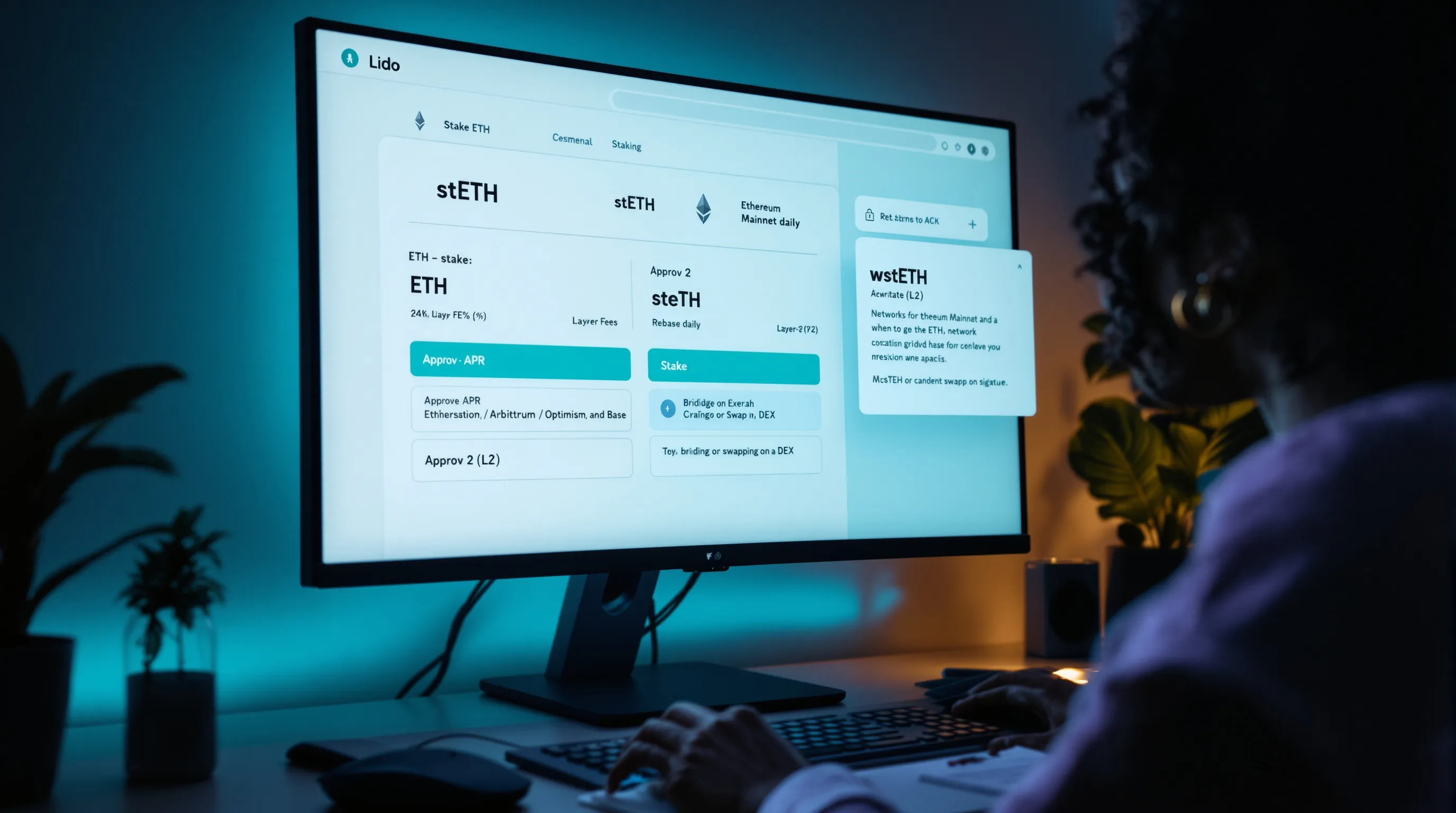
Option A: Stake on Ethereum Mainnet via Lido App (stETH)
- Go to Lido’s official site (verify URL). Connect your wallet.
- Choose ETH → stETH, enter amount, and review APR and gas.
- Approve (if prompted) and confirm the stake transaction.
- Add stETH to your wallet for visibility: your stETH balance will rebase daily.
Option B: Stake on L2 Using wstETH (Arbitrum/Optimism/Base)
Two common routes:
- Bridge then stake: Bridge ETH to your L2 and use an integrated Lido route or on-chain wrapper to receive wstETH.
- Swap route: Acquire wstETH directly on L2 via a DEX if liquidity is good, then optionally unwrap to stETH where supported.
Always confirm the canonical wstETH contract on the L2’s block explorer.
Confirm Transactions, Add Tokens to Wallet, and Verify Balances
- Add stETH/wstETH contract addresses manually to display balances.
- Verify final receipts on Etherscan or the L2 explorer.
- If wrapping/unwrapping, cross-check the exchange rate and expected output before signing.
Track Rewards and Manage Your stETH/wstETH
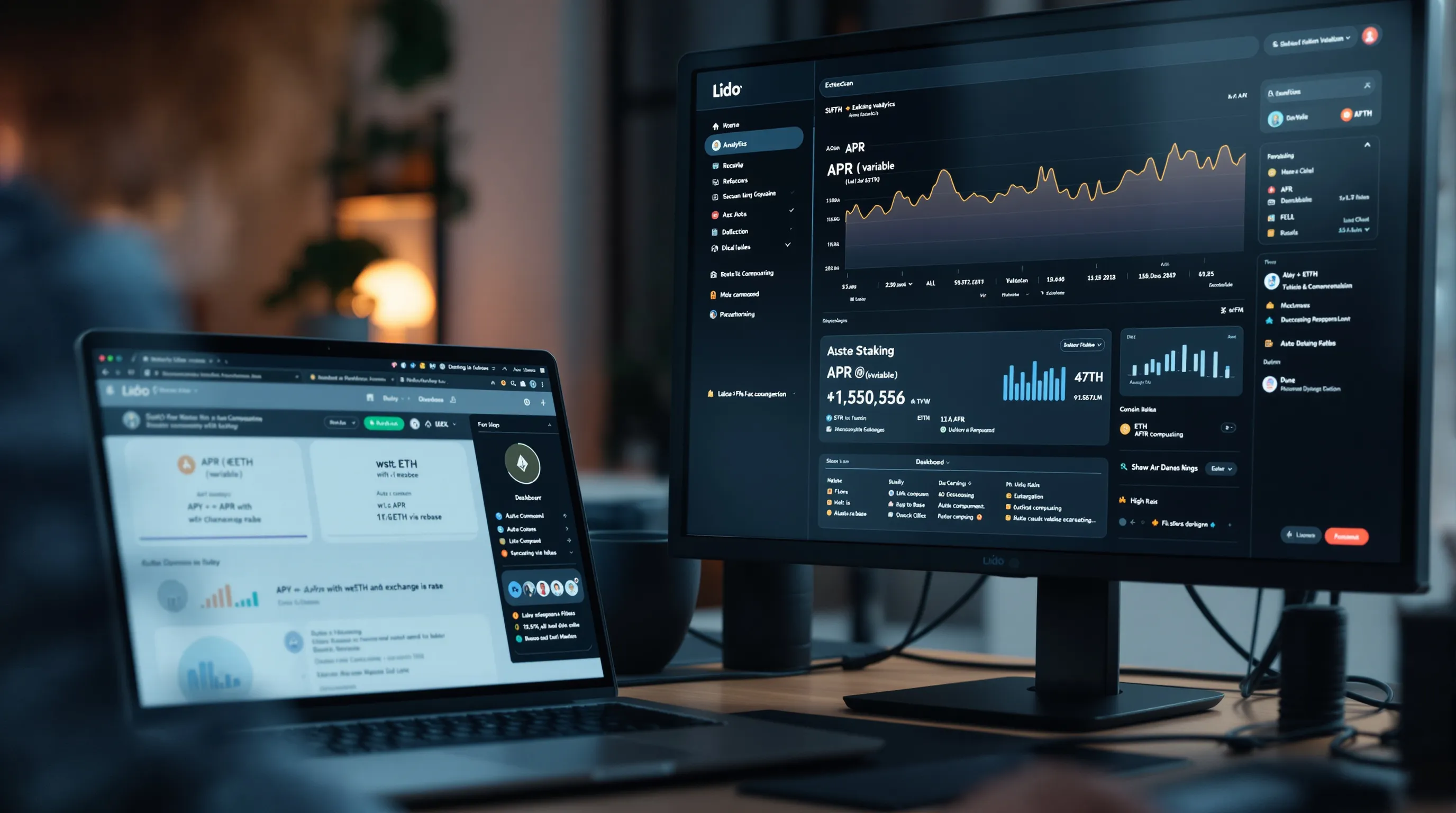
How APR Works: Daily Rebasing for stETH vs Non-Rebasing wstETH
- stETH: Balance increases daily when rewards are distributed.
- wstETH: Token amount is static: value accrues via an increasing wstETH↔stETH exchange rate.
APR reflects recent validator performance and network conditions: it fluctuates.
APY Math, Compounding, and Gas-Efficient Reinvestment Options
- APY > APR when compounding: with stETH, rebases auto-compound.
- With wstETH, compounding is implicit via the exchange rate: no action needed.
- If you deploy into DeFi (e.g., lending or LPs), consider protocols that auto-compound or minimize harvest costs.
Monitoring Tools: Lido Analytics, Dune Dashboards, and On-Chain Explorers
- Lido analytics pages for TVL, APR history, and validator performance.
- Dune dashboards for stETH/wstETH supply, flows, and peg metrics.
- Etherscan and L2 explorers to verify balances, allowances, and historical transactions.
Put stETH/wstETH to Work – Safely
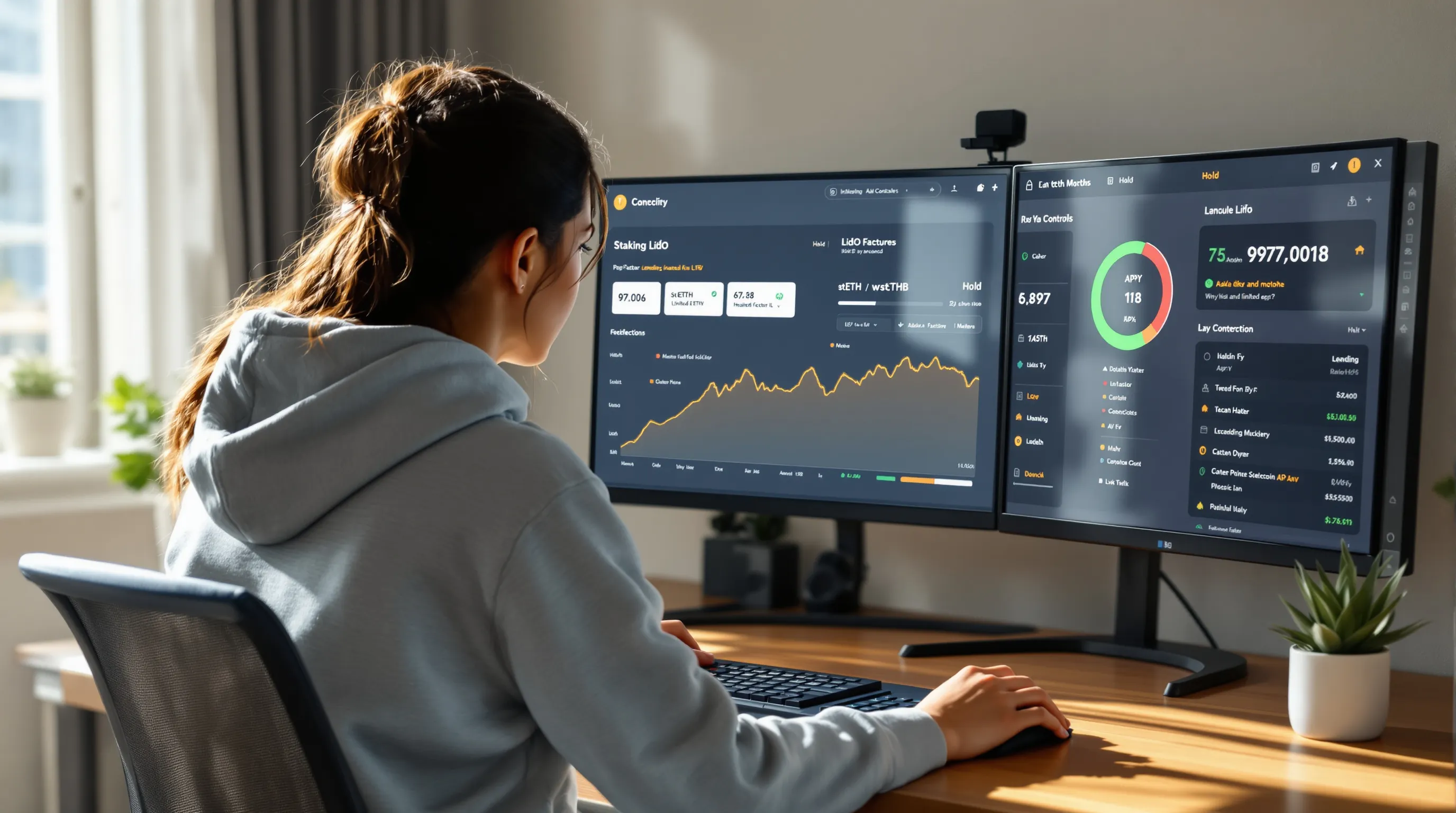
Conservative Plays: Hold, Single-Sided LPs, and Peg-Conscious Pools
- Hold: The simplest, earn staking rewards without smart-contract stacking.
- Single-sided vaults: Some protocols offer stETH or wstETH vaults with limited impermanent loss.
- Peg-aware pools: If you LP stETH/ETH, monitor the discount/premium: IL can negate rewards if the peg wobbles.
Borrowing and Lending: Using stETH/wstETH as Collateral Without Over-Leverage
- Aave/Morpho-style lending markets accept stETH/wstETH. Keep conservative LTV and a healthy buffer.
- Don’t loop leverage aggressively: liquidation cascades can widen the peg discount.
Layer-2 Integrations and Bridging Considerations (Fees, Finality, Risks)
- L2s reduce transaction costs, but confirm finality times and bridge security assumptions.
- Prefer canonical bridges or well-audited alternatives: test with small amounts first.
Risk Controls: Health Factors, Liquidation Buffers, and Peg Monitoring Alerts
- Maintain a target health factor (e.g., >1.5–2.0) if borrowing.
- Set alerts for stETH:ETH price, wstETH exchange rate changes, and on-chain health factor.
- Use allowance managers to cap protocol spend and revoke when done.
Unstake, Withdraw, or Exit Liquidity When You Need To
Native Unstaking: Request, Queue Times, and Withdrawal Steps
- In the Lido app, choose stETH → unstake (or unwrap wstETH to stETH first if needed).
- You’ll enter a withdrawal queue: timing varies with network conditions and exit capacity.
- When ready, claim ETH to your wallet: expect gas fees.
Instant Liquidity via DEX Swaps: Route Selection and Slippage Management
- If the peg is tight and liquidity deep, swap stETH or wstETH to ETH on aggregators.
- Compare multiple routes and set tight slippage: avoid thin pools.
- For large trades, split orders or use RFQ/OTC desks to reduce impact.
Converting Between stETH and wstETH: Bridging Back to Mainnet
- Wrap/unwrap using the official Lido interface or verified contracts.
- Bridging from L2 back to mainnet can take minutes to days depending on the bridge: factor fees and finality.
Troubleshooting: Stuck Transactions, Delays, or Price Divergences
- Stuck tx: Increase priority fee or use a replacement transaction.
- Long queues: Monitor Lido’s withdrawal status page: avoid panic moves.
- Peg gaps: Check market depth: consider waiting or using partial exits to manage slippage.
U.S. Taxes, Security Best Practices, and Next Steps
Tax Basics for Americans: Reward Income, Basis, and Disposal Events
- Rewards from staking are typically taxable as income when received (stETH rebase or wstETH accrual) at fair market value. Basis adjusts accordingly.
- Swaps (e.g., stETH→ETH) and disposals are usually taxable events. Track dates and values. Consult a CPA: rules evolve.
Recordkeeping: Portfolio Trackers, CSV Exports, and Wallet Labeling
- Use portfolio/tax tools that support stETH/wstETH and rebasing logic.
- Export CSVs from explorers and exchanges: label wallets and tag transactions for clean records.
Security Hygiene: Hardware Wallets, Allowance Reviews, and Phishing Defense
- Sign from a hardware wallet: use a dedicated DeFi address.
- Regularly review token allowances with tools like Revoke/Cauldron.
- Bookmark official Lido and bridge URLs: never sign blind signatures.
When Not to Stake, Portfolio Sizing, and Where to Learn More
- Skip staking if you need near-term ETH liquidity, can’t tolerate peg deviations, or lack time for monitoring.
- Keep position size proportional to your risk budget: diversify across protocols only if you can manage complexity.
- Learn more via Lido’s docs, Ethereum staking research, and independent security audits.
Brief risk reminder: Liquid staking adds protocol, market, and operational risk on top of ETH price risk. Size accordingly, test with small amounts, and review regularly.
Disclaimer: This content is for informational purposes only and does not constitute financial or investment advice.